

The Strain Paradox: How small changes can make big differences
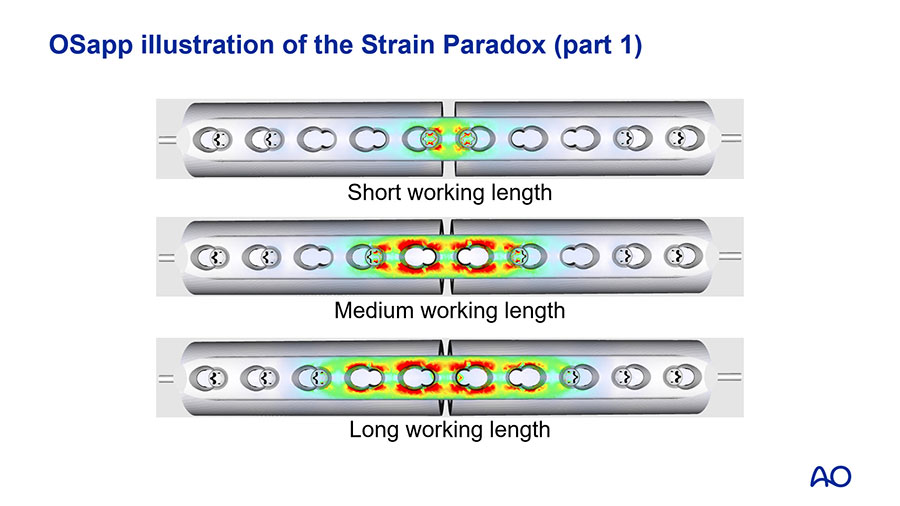
An expert panel in fracture biomechanics examines a common misconception in optimizing biomechanical performance of plated diaphyseal gap fractures: that guidelines for screw position and plate working length change depending on the size of the fracture gap. This misconception has been termed the Strain Paradox.
It is important for trauma surgeons to understand this misconception for two key reasons:
- Firstly , their decisions on screw distribution in plated fractures have a significant effect on implant fatigue life.
- Secondly, it is important that AO faculty have a clear understanding of the evidence base behind plate decision-making, how this should inform clinical practice and the advice they give course participants and surgeons in training.
The panel was led by Simon Lambert and comprised Mark Glyde, Mike Kowaleski and Peter Varga.

Simon Lambert
Chair, Upper Extremity Global Expert Committee, AO Innovation Translation Center

Mark Glyde
AO VET Education Commission chair

Mike Kowaleski
AO Foundation Board member and past Chair, Veterinary Global Expert Committee

Peter Varga
ARI Deputy Program Leader Biomedical Development, Focus Area Leader Biomechanics and Modeling
Video: Watch the expert panel review the evidence, clarify the concepts and seek to correct the misconception that has created the Strain Paradox.
The Strain Paradox misconception arose largely consequent to the clinical extrapolation of an excellent landmark piece of research by Stoffel and coworkers in 2003 (Biomechanical testing of the LCP – how can stability in locked internal fixators be controlled? Injury, Int. J. Care Injured 34; 2003 S-B11–S-B19).
One aspect of their research investigated the effect of plate working length, specifically the biomechanical effect of omitting screws adjacent to the fracture, in two synthetic fracture models of different gap size. A large gap model simulated a comminuted diaphyseal fracture where bone contact could not occur on loading. A small gap model simulated a poorly reduced or non-compressed simple fracture where loading resulted in cortical bone contact.
While the findings of their research have been subsequently validated, those results were specific to in vitro test conditions and to gap-closing or tension bending of plated constructs created through applied axial compression loads.
In the in vitro small gap model, single load-direction axial compression of the poorly reduced or non-compressed simple fracture model led to gap closing (tension bending) and cyclic load sharing through cortical contact. The in vitro biomechanical benefit of this specific modelled scenario is different to the in vivo biologic and biomechanical environment of a clinical case with complex multi-directional loading, including gap opening (compression bending), torsional loading, intermittent plate-bone surface contact during loading, and fracture surface bone resorption in response to cyclical high interfragmentary strain.
Extrapolating the in vitro findings for the small gap model to an in vivo clinical situation has the potential to create a disadvantageous biomechanical environment for bone healing and construct longevity. Fracture gap strain and plate strain are not synonymous: plate strains may exceed the threshold for plate failure over the lifetime of the construct if qualitatively and quantitatively sufficient bone formation does not occur. Conversely, the actual gap strain (fracture gap strain in vivo) varies according to loading conditions and differs from the apparent plate strain (plate strain demonstrated by in vitro testing): excessive interfragmentary motion (“permitted” by consideration of apparent plate strains) may induce excess actual gap strain, generating a fibrocartilaginous response which may not transform into bone. This is the “strain paradox”.
This FacultyFocus builds on the considerable biomechanical research that has been published since 2003 and explains why surgeons should consider the “apparent” and “actual” fracture gap strains in relation to the plate construct. These conditions are demonstrated and explained in this expert panel review using OSapp, an online biomechanical knowledge hub for fracture fixation. This freely available online resource is useful for AO faculty for both understanding and explaining the Strain Paradox misconception.