

Voices for change: AO women in STEMM
My journey: Simona Ciriello
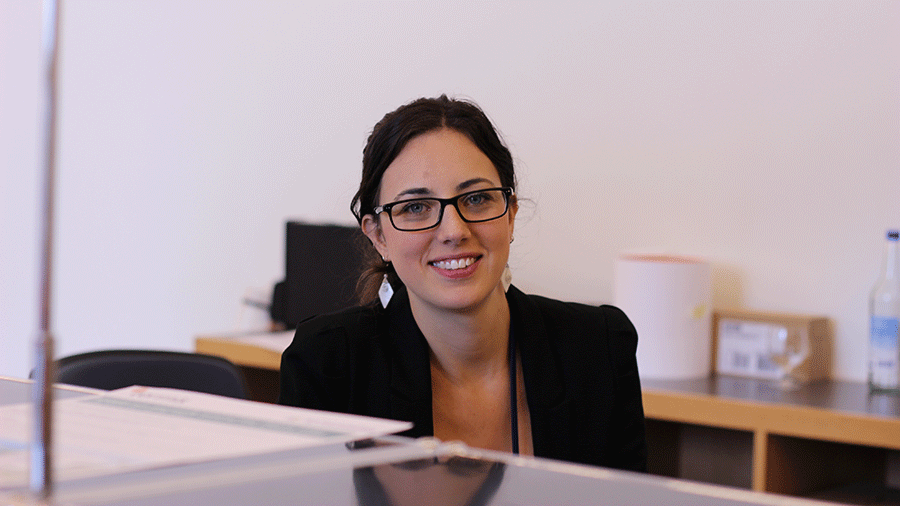
Know who you are, what you want to do, and go get it—and be ready to change directions if you change your mind. That’s the advice Simona Ciriello, PhD, offers to science, technology, engineering, math, and medicine (STEMM) students and professionals facing barriers to realizing their goals.
That approach has served Ciriello well: Trained as a research scientist specializing in biotechnology, she has been the production editor of the highly respected European Cells & Materials (eCM) journal for nearly six years. The journal, published by the AO Research Institute Davos (ARI), focuses on preclinical research within the musculoskeletal field: orthopedics, trauma, maxillofacial (including dental), and spine.
Ciriello considers herself fortunate to have grown up in a small village near Naples, Italy, where her schools were just a short walk from home, families knew one another, and a nurturing environment thrived. The community included a science-based school, and it was during high school that her interest in the sciences was triggered.
“My biology teacher was really great—her classes were my favorites. She did not limit herself to teaching from books. She explained so much more to us, and gave us so much knowledge,” Ciriello recalls. “My choice of university studies was based on what I did and did not like. I needed to do something that had a practical side, I knew it had to be something scientific and then I made my choice based on that.”
Biotechnology piqued her interest.
“While talking with people who were in various university faculties, I met a biotechnology student. He told me exactly what it was about, and I was really interested,” she says. Ciriello graduated cum laude from the University of Naples Federico II in Italy, earning a bachelor of science degree in biotechnology for health and a master of science degree in medical biotechnology. She then earned her doctorate at the University of Cologne in Germany.
A change of direction
“When I was at university, I imagined myself doing research in a lab, but the problem was that I did not like it when I did it,” she says. “I did my PhD and realized I just didn’t have it. Science is very competitive and frustrating; you can put in a lot of work and gain nothing. I could not accept that you just work, work, work, for maybe no results. I tried for another year when I went to work for a start-up; I thought, ‘Maybe it will be different,’ but working in a lab was just not for me.”
Ciriello soon found that making a contribution to science can come in forms other than working in a lab: She came upon the eCM production editor job posting at ARI—and found her place in the world of research.
“I ended up with a job I had never done before, but while doing it, I found that I actually love it,” she explains. “It’s the combination of the job itself and the people I work with. I especially like that I see the results of my efforts straight away, and that’s important to me. In addition, I’m still in science and able to stay updated on what’s happening.”
In her role as production editor of the eCM journal, Ciriello checks every submitted scientific paper to ensure that they meet a certain standard, and, upon acceptance, edits them, lays them out for publication, and then liaises with the various authors for approval. In addition, Ciriello’s job entails administrative work, maintaining the journal’s website and social media presence, and supporting the journal’s annual conference.
“It’s very different from working in a research lab,” she says, noting that she had an important mentor on the editing side. “Fortunately, Dr Iolo ap Gwynn—one of the journal’s cofounders—taught me a lot from an editing point of view.”
Ciriello also feels fortunate to work in a supportive environment.
“The people working on the journal—I think of them as friends and not just colleagues. We work, but we also have a lot of fun together,” she says.
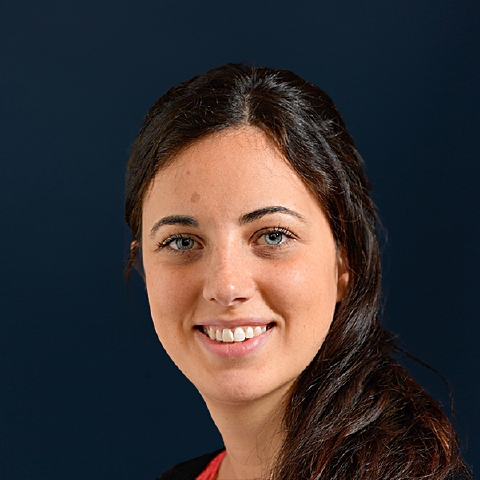
"I ended up with a job I had never done before, but while doing it, I found that I actually love it"
Simona Ciriello, PhD, AO Research Institute Davos
‘Maybe in 20 years’
Still, one of the first things Ciriello noticed when she started working at the AO was a photo of AO Trustees prominently displayed just inside the main entrance door to the AO center.
“There are probably 50 people in that photo—and only one of them is a woman,” she says. “I cannot stop wondering, ‘Why is it that more women don’t manage to get there? Why is there only one woman? Are there fewer opportunities for women? Are we less competitive?’ I am optimistic, though, because I see more female orthopedic surgeons and fellows. If women keep becoming surgeons, maybe in 20 years, that picture by the front door will look different.”
It’s very likely that the photo Ciriello mentions will, indeed, look different in the future, thanks in part to AO Access, the AO’s diversity, inclusion, and mentorship initiative. AO Access is working to drive change and has a vision of the AO being a diverse and inclusive organization with equitable access and opportunity for advancement within the AO at all levels, regions, clinical divisions, and units. The initiative takes a comprehensive and longitudinal approach to changing the current AO culture, creating an inclusive climate, establishing an environment where everyone can thrive.
The bigger picture
In the larger field of science, Ciriello sees some underrepresentation, and she has questions.
“I do see women as an underrepresented group. At university, in the biotechnology department, the students were mostly women and the professors mostly men. If that many women started in that field of study, why are there so few women professors?” she asks. “Even at the AO, the group leaders are mostly men. And of course, some nationalities are underrepresented, too. As for ARI fellowships, the fellows are mostly European, American, and Chinese, with just an occasional fellow from Africa—I don’t think that’s anyone’s fault, actually; it could be for financial or geographical reasons that scientists from Africa, for example, don’t get to come to ARI.”
"I cannot stop wondering, ‘Why is it that more women don’t manage to get there? Why is there only one woman? Are there fewer opportunities for women?"
Simona Ciriello, PhD, AO Research Institute Davos
Overcoming biases
All in all, Ciriello is well aware of the advantages that have gotten her where she is.
“I’m European, white, and educated. All of these things are advantages,” she says. “Although I believe that as Italians we have a gap to fill as soon as we leave our country, given that we don’t study English that much in school—2–3 hours a week, top. Speaking a different language is not as deeply rooted in our culture as it is, for example, in Germany, where one also has cinemas and television in English.”
Something as simple as bringing together people from different backgrounds can go a long way toward overcoming biases, she says.
“If you get to work with someone who is completely different from you, you will come to know how that person is an asset to the team, for example, and you’ll learn about one another’s cultures and ways of working,” Ciriello explains. “One very good thing about the AO is that it attracts so many people from around the world.”
Ciriello’s advice to STEMM students and professions facing barriers is simple.
“Whatever your field is, it’s important to know who you are, what you want to do, and then really go for it. Make the effort and be ready to make sacrifices for what you want. It’s going to take time, but step-by-step, you can get there,” she notes.
Being flexible is also important.
“Being flexible enough to change your target is also important. I did not plan to be here at ARI doing what I do today. I imagined myself working as a scientist in a lab. But even if you have a dream and you’ve put in a lot of effort and then realize that it’s no longer what you want, there’s always time to change direction,” says Ciriello. “You can always have a new dream and work toward that. There’s nothing wrong with letting go and finding another path. It might take you longer, but in the end, it will pay off.”